BRIGHT FUTURE FOR ETHIOPIANS !!!

BRIGHT FUTURE FOR ETHIOPIANS !!!

Friday, 23 December 2016

Ethnic tensions in Gondar reflect the toxic nature of Ethiopian politics

From uneven development to authoritarian government, the morass of issues facing the city of Gondar offer a snapshot of Ethiopia’s wider problems
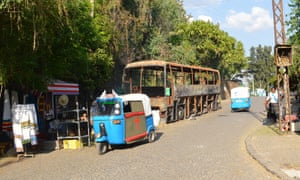
A coach torched by protesters during anti-government unrest in Gondar, Ethiopia
 A coach torched by anti-government protesters in Gondar, Ethiopia. All photographs by William Davison
In Gondar, a city in Ethiopia’s northern highlands, a lone tourist pauses to take a photo of a fortress built more than two centuries ago. Nearby, past a row of gift shops, lies the wreck of a coach torched during unrest in August.
Gondar, known as “Africa’s Camelot”, was once the centre of the Ethiopian empire – at a time when that empire was defined mainly by Amhara traditions. 
Today, the city is facing new tensions that have a complex history. A territorial dispute between elites here in the Amhara region and those in neighbouring Tigray has been simmering for at least 25 years.

Wednesday, 14 December 2016

Ethiopia: Government blocking of websites during protests widespread, systematic and illegal

The Ethiopian government systematically and illegally blocked access to social media and news websites in its efforts to crush dissent and prevent reporting of attacks on protesters by security forces during the wave of protests that started in November 2015 and led up to the state of emergency, a new report released today shows.
Research conducted by Amnesty International and the Open Observatory of Network Interference (OONI) between June and October 2016 shows that access to WhatsApp was blocked, as well as at least 16 news outlets.

Thursday, 1 December 2016

Ethiopian opposition leader from restive region arrested

By Aaron Maasho | ADDIS ABABA

An Ethiopian opposition leader from a region hit by deadly anti-government protests has been arrested after returning from meeting members of the European Parliament in Brussels, a political ally said on Thursday.

Merera Gudina leads the Oromo People's Congress from Ethiopia's Oromiya region, which has been the center of protests against land grabs and what opponents say is a government clampdown on political freedoms. Officials deny such charges.

Thursday, 24 November 2016

Why is the Ethiopian diaspora so influential?

During a year of anti-government protests throughout Ethiopia, its global diaspora, particularly that in the US, has been deeply involved - and not just vocally, writes Addis Ababa-based journalist James Jeffrey.
Twitter and Facebook have been blocked since a six-month state of emergency was imposed last month as the government tries to restore order across the country's two most populous regions of Oromia and Amhara.
There are also internet blackouts, primarily targeting mobile phone data, which is how most Ethiopians get online - and is for many residents of the capital, Addis Ababa, the most frustrating effect of the security clamp down.

Wednesday, 23 November 2016

The Oromo protests have changed Ethiopia


The struggle of the Oromo people has finally come to the attention of the global public conscience.


Listen to this page using ReadSpeaker


Demonstrators chant slogans while flashing the Oromo protest gesture during Irreecha, the thanksgiving festival of the Oromo people, in Bishoftu town, Oromia region, Ethiopia [Reuters]
Demonstrators chant slogans while flashing the Oromo protest gesture during Irreecha, the thanksgiving festival of the Oromo people, in Bishoftu town, Oromia region, Ethiopia [Reuters
November 12 marked the first anniversary of the Oromo Protests, a non-institutional and anti-authoritarian movement calling for an end to decades of systemic exclusion and subordination of the Oromo.
Although the protests were sparked by a government plan to expand the territorial and administrative limits of Ethiopia's capital, Addis Ababa, into neighbouring Oromo towns and villages, they were manifestations of long-simmering ethnic discontents buried beneath the surface.

Saturday, 19 November 2016

Ethiopia’s internet crackdown hurts everyone

James Jeffrey
Freelance journalist based in Addis Ababa and regular contributor to IRIN
Ethiopia has never been an easy place to operate. But a six-month state of emergency, combined with internet and travel restrictions imposed in response to a wave of anti-government protests, means it just got a whole lot harder.
The government has targeted the mobile data connections that the majority of Ethiopians use to get online. Internet users have also been unable to access Facebook Messenger and Twitter, with a host of other services also rendered unreliable.
This has impacted everyone: from local businesses, to foreign embassies, to families, as well as the extensive and vital international aid community.
“Non-governmental organisations play crucial roles in developing countries, often with country offices in the capitals, satellite offices across remote regions, and parent organisations in foreign countries,” said Moses Karanja, an internet policy researcher at Strathmore University in Nairobi.  “They need access to the internet if their operations are to be efficiently coordinated.”

A political decision

The Ethiopian government has been candid about the restrictions being in response to year-long anti-government protests in which hundreds of people have died.
It has singled out social media as a key factor in driving unrest. Since the beginning of October, there has been a spike in violence resulting in millions of dollars’ worth of damage to foreign-owned factories, government buildings and tourist lodges across Oromia Region, initially ground zero for the dissent.

Wednesday, 16 November 2016

Will Ethiopia’s Year-Long Crackdown End?

Need for Meaningful Reforms, Accountability

When I met 15-year-old “Meti” (not her real name), she felt her dream of becoming a nurse was over. In February, Meti and her classmates joined a protest in East Hararghe, in Ethiopia’s Oromia region, against the government’s displacement of farmers around Addis Ababa, security force abuses, and the repression of opposition voices. When security forces started shooting, she and her classmates ran; she turned to see her brother shot dead. Later that night, security forces arrested her father and two of her brothers. Then school officials informed her they were suspending her from school for her participation in the protest.